
Zach Lubin, Founder of Run-N-Ride Relays and Wagul, a consultancy aimed at connecting sports with sustainable practices, writes about getting LA moving through the “Movement Movement”, and how improving public transit can make sports more accessible, and greener.
In the build-up to the world’s biggest sporting events, the City of Los Angeles and Metro are investing billions of dollars into improving public transit. While rail lines are extending and streets are being redesigned for more bus lanes, the biggest barrier to widespread use is the stigma that Metro has yet to overcome.
Like many other behaviors, ridership plummeted during the COVID-19 pandemic, and the struggle to hit pre-pandemic levels remains. In that same timeframe, one activity that grew significantly in Los Angeles was running. The LA Running Connoisseur has estimated approximately 200 run clubs across the city, and that momentum shows no signs of slowing down.
With Los Angeles set to host eight World Cup matches this summer, the Super Bowl in 2027, and the Summer Olympic and Paralympic Games in 2028, there is no better time to connect running with public transit in one of the world’s most car-centric cities. Keeping sustainable mobility and accessible cities front of mind, we launched the “Movement Movement” with the Run-N-Ride Relays pilot.
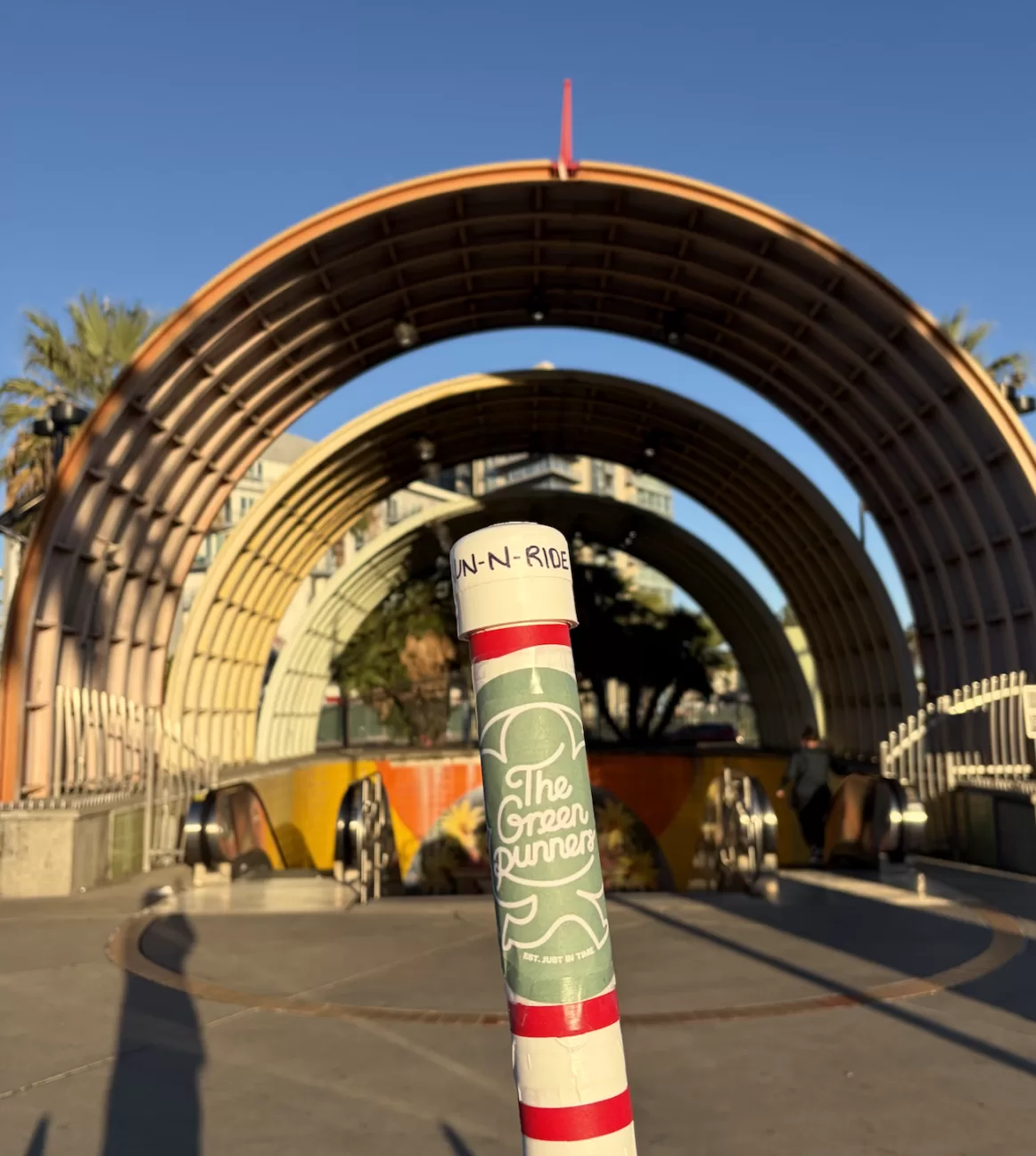
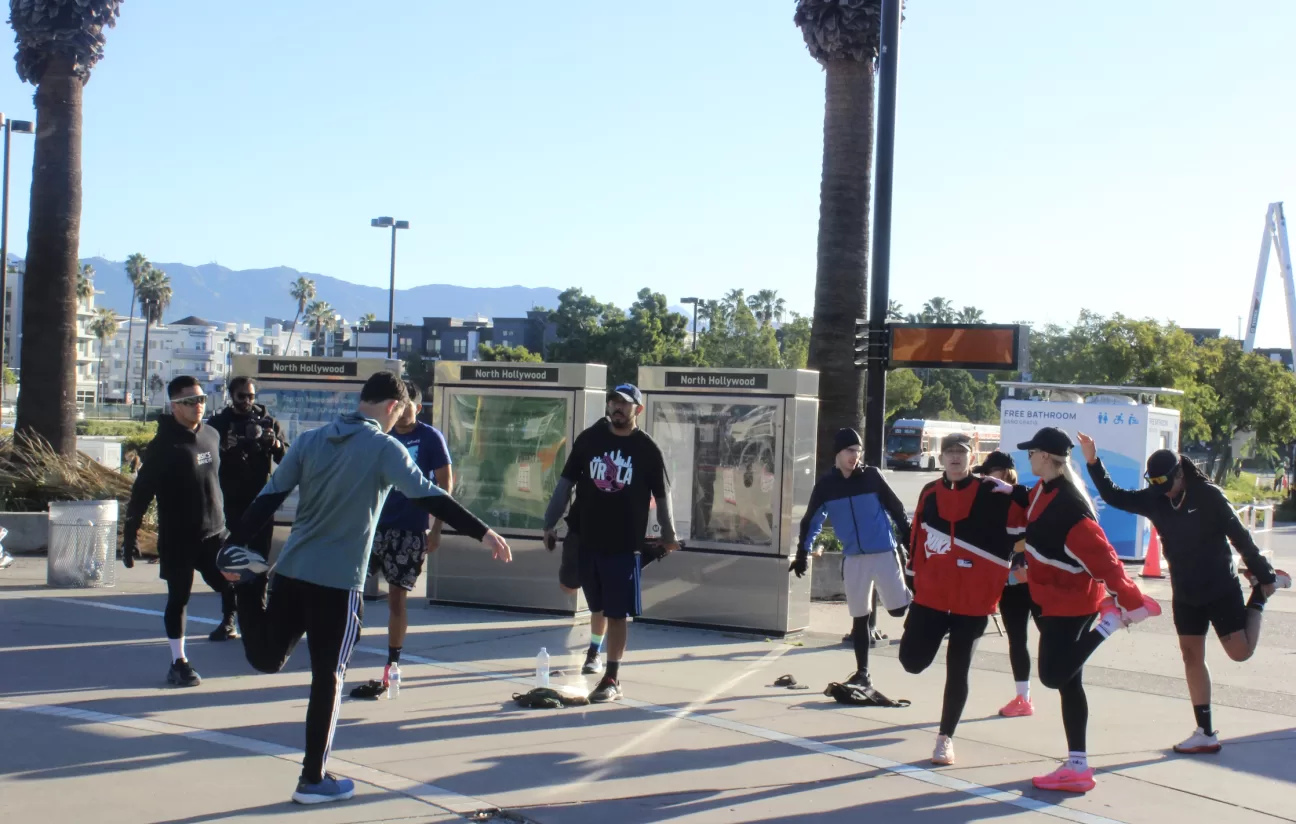
The event was LA’s first-ever public transit relay, and it covered the entire length of one of Metro’s oldest rail lines.
Spanning 23 miles from North Hollywood to Union Station, a team of ten runner ambassadors from across the city ran in pairs past numerous landmarks, including Universal Studios, the Walk of Fame, and Grand Central Market, to name a few. More relevant for Angelenos, however, were the local hidden gems like Campo de Cahuenga and Barnsdall Art Park, where participants learned about the history of the region’s indigenous communities and saw stunning views of Hollywood and Griffith Park.
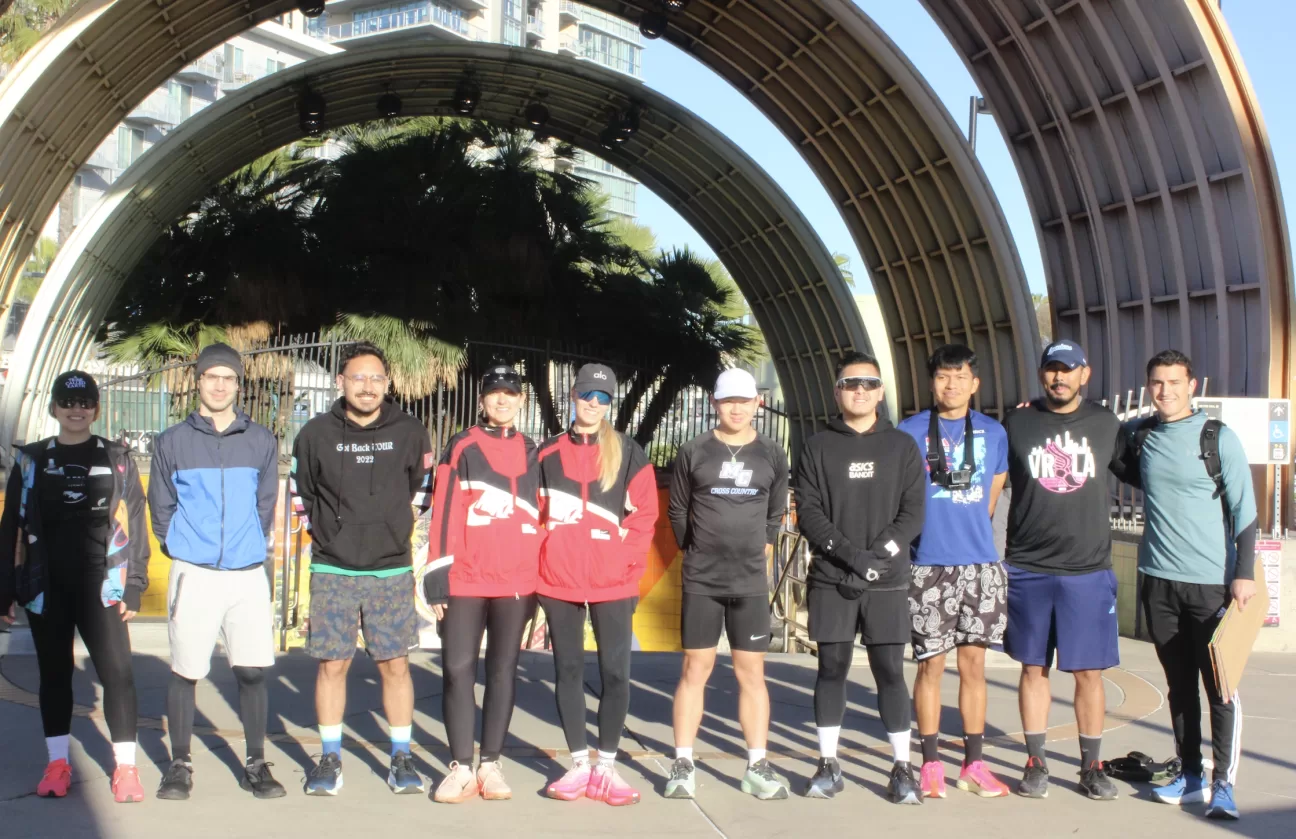
The main event was certainly the relay itself, but two promotional runs beforehand opened it up to more runners, and a push from various non-runners led to the integration of a community engagement piece.
Partnering with the Action Mapping Project (AMP), an initiative based out of Washington state that fosters neighborhood change through data production, education, and direct action, the Run-N-Ride Relays team designed a tool to gather key insights from all participants (runners, walkers, cyclists, etc.) that can guide Metro’s priorities when it comes to incentivizing ridership.
Including promotional events and relay day volunteers, 23% of all participants were new Metro riders – that means that they either bought their first TAP card (used to pay transit fares across LA County) or they had one already but used it for the first time. At least two runners also shared that this was their first time taking public transit in over a decade.
After speaking with Metro’s Sustainability Policy team, I learned that their primary focus going into the LA28 Games is heat mitigation. So, in terms of what respondents would like Metro to focus on to make the stations more heat resilient, the action map showed that adding shade through tree cover and overhangs was the top priority.
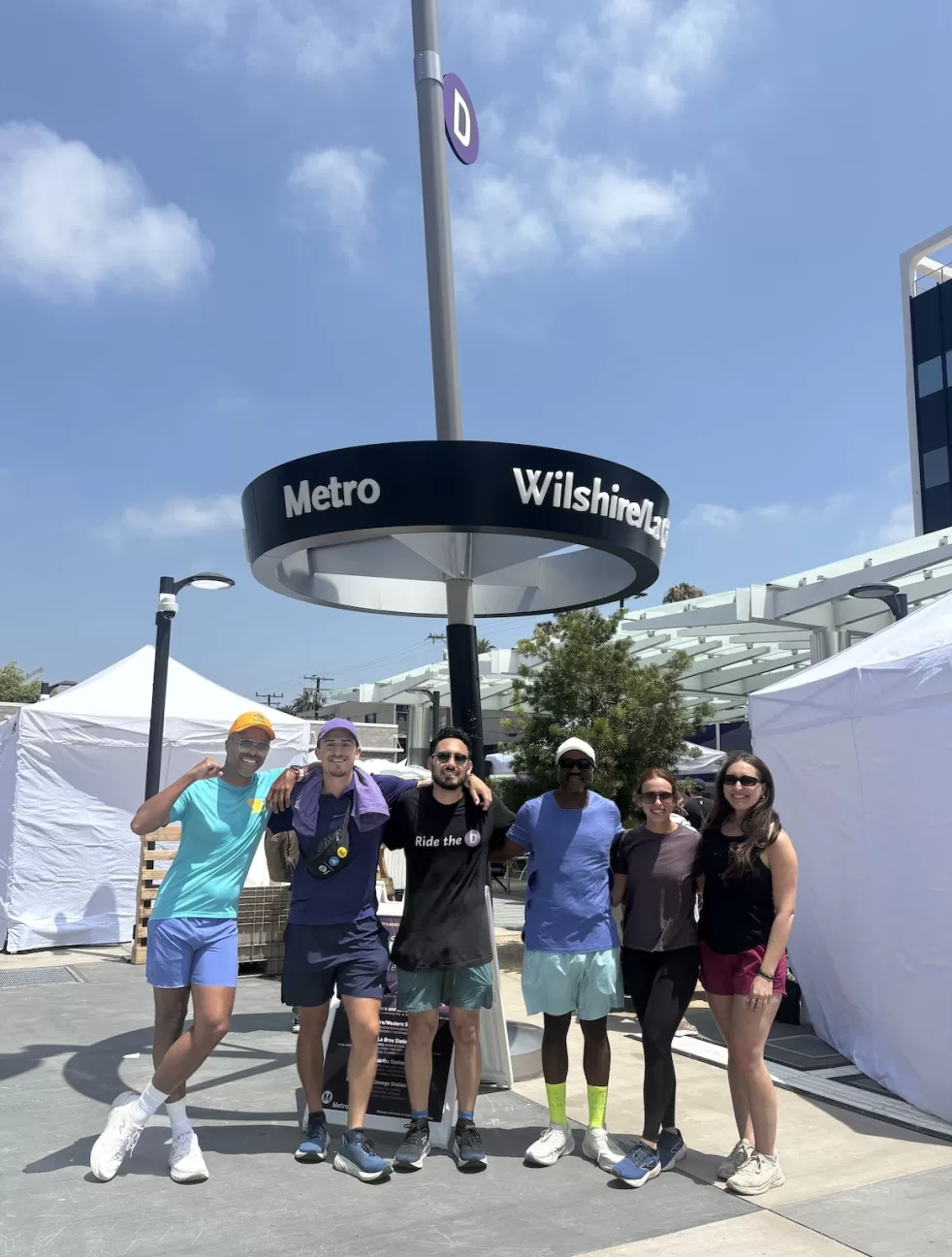
The success of the pilot event leaves us with one question: Where to next? Last Friday, May 8th, we kept the momentum going with a 10-mile group run for the opening of a key rail extension through the heart of LA.
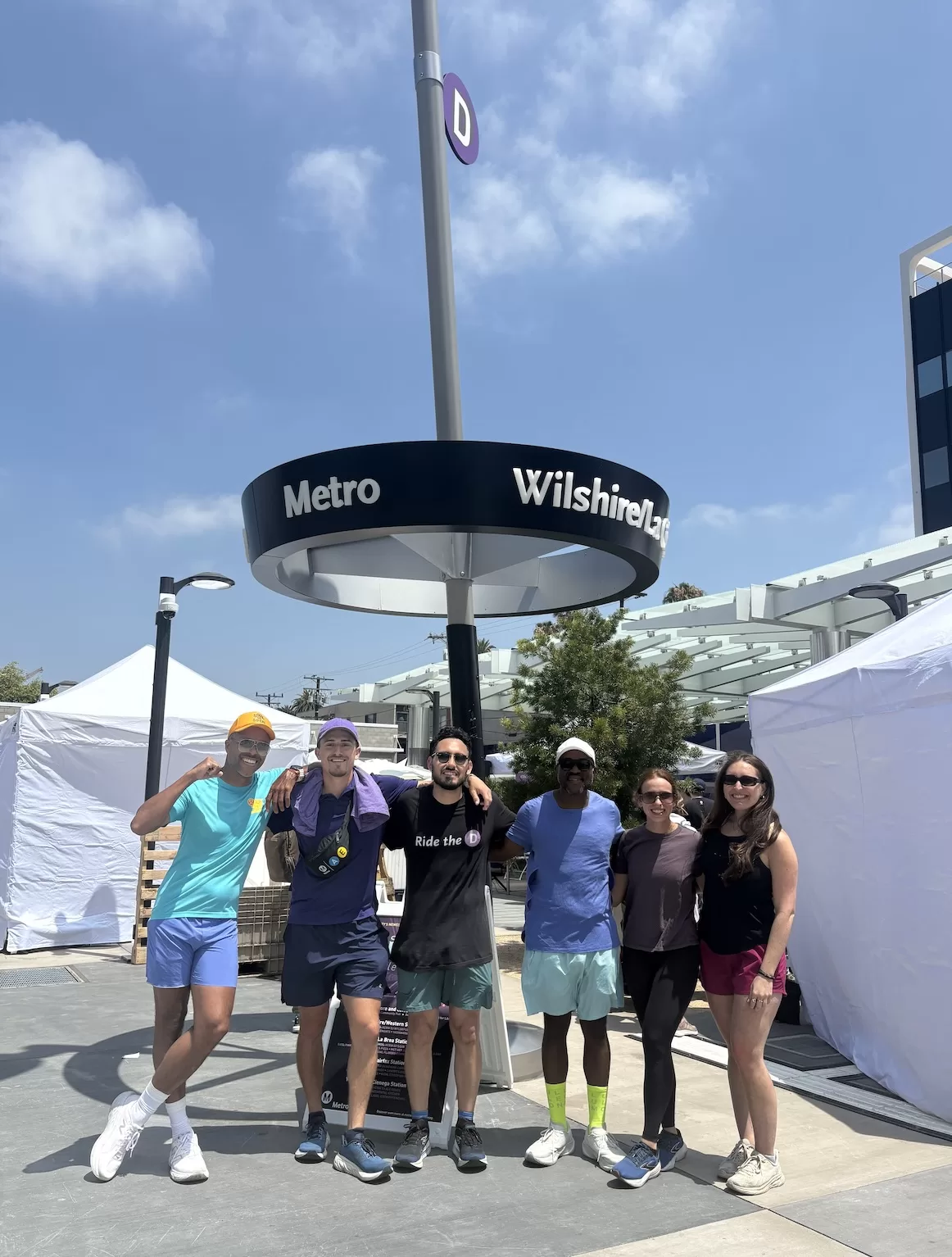
A few runners gathered at Union Station to run to the new endpoint in Beverly Hills. Not only did we make it just in time to catch the first train back, but we also featured in the local news. A bonus was that we organized a Community Partnership with The Academy Museum of Motion Pictures for our participants to receive a private tour of the museum after completing the run.
As for the next relay, popular requests include the beach, Pasadena (where the Rose Bowl is located), and Westwood (set to host the Olympic Village).
Additional opportunities could follow other Metro lines or serve as venue-to-venue relays to demonstrate car-free transit going into these major sporting events.
The Movement Movement has just begun, and we can’t wait to get started on planning the next Run-N-Ride Relay in whatever capacity it may be.