

How can we make our kit go further?
Making considered choices and thinking ethically about what to do when kit has reached end of life, are two key things to think about.
Lena Bartoszewicz, PhD Researcher in Textiles and Apparel, University of Manchester, writes:
“Passing on running kit responsibly begins with understanding its condition. UK charities and textile collectors spend £88 million every year dealing with unsellable clothing donations (1), which places significant pressure on already stretched systems. This is why items should be cleaned and in a wearable condition before they are donated. A simple rule is to ask yourself whether you would buy the item if you saw it in a charity shop.
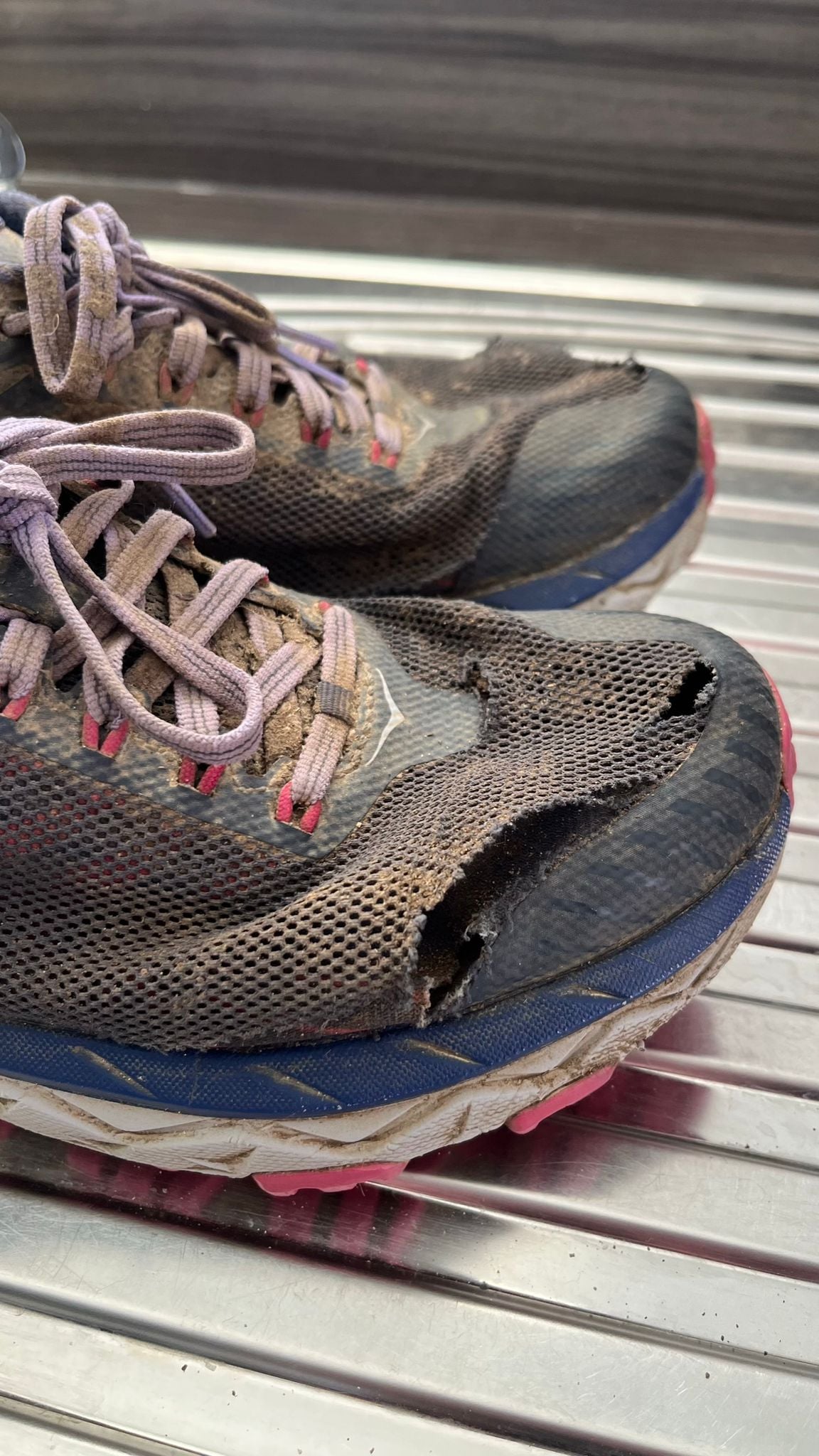
“Repair should always be considered before making a donation or reselling onwards. Research shows that repairing clothing can displace up to 82% of new purchases (2), which directly cuts the carbon, water and energy use associated with producing new kits. With more than 8 million people in the UK running regularly (3), the cumulative effect of extending the life our running kits are substantial. Learning basic sewing skills, such as re-stitching seams or patching worn areas also builds a deeper appreciation for the value of what we already own.
“When a piece of kit can no longer be worn, upcycling or downcycling keeps it in use and reduces pressure on recycling systems. The UK discards 711,000 tonnes of used textiles each year (4), and more than 80% of textile waste in Europe is still landfilled or incinerated (5). This is especially concerning for running kits, which are typically made from polyester and other synthetic fibres. Polyester does not biodegrade and can persist in landfill for decades or longer, breaking down only into microplastics rather than decomposing naturally. Making even simple yet useful items, from drawstring bags to shoe-cleaning cloths, keeps these materials circulating for longer and prevents additional synthetic waste from entering landfill.”

- WRAP. “Charities, Local Authorities and the Public to Bear Cost of UK’s Used Textiles Crisis.” WRAP – the Waste and Resources Action Programme, 2025, www.wrap.ngo/media-centre/press-releases/charities-local-authorities-and-public-bear-cost-uks-used-textiles.
- WRAP . “Fast Fashion Could Be Left on the Peg as Preloved and Repair Displace New Sales.” WRAP – the Waste and Resources Action Programme, 2025, www.wrap.ngo/media-centre/press-releases/fast-fashion-could-be-left-peg-preloved-and-repair-displace-new-sales.
- Floom Creative. “UK Running Boom 2025: Marketing Trends, Apps & Consumer Insights.” Floom Creative, 26 Sept. 2025, www.floomcreative.co.uk/uk-running-boom-2025-marketing-trends-apps-consumer-insights/
- TexFash. “In UK, Half of Used Textiles Land in Bin, Recycling in Throes of a Crisis.” Texfash.com, May 2024, www.texfash.com/special/in-uk-half-of-used-textiles-land-in-bin-recycling-in-throes-of-a-crisis
- European Parliament. “Fast Fashion: EU Laws for Sustainable Textile Consumption | Topics | European Parliament.” Topics | European Parliament, 2020, www.europarl.europa.eu/topics/en/article/20201208STO93327/fast-fashion-eu-laws-for-sustainable-textile-consumption.
The “Repair vs. Replace” Guide for Runners
1. Stinky Kit
The Problem: Synthetic fibers (polyester/nylon) are oleophilic, meaning they love oil. Body oils and bacteria get trapped in the microscopic crevices of the fiber, leading to a smell that returns the moment you warm up, even after a wash.
- The Fix: Don’t bin it! Soak the item in a solution of one part white vinegar to four parts water for 30 minutes before washing. Alternatively, use a specialized “sports wash” detergent designed to break down biofilms.
- When to Retire: If the fabric has physically degraded or “thinned” to the point of being see-through, it’s time to downcycle it into a cleaning rag.
2. Salty Zips
The Problem: Dried sweat contains salt and minerals that crystallise inside the slider of your running jacket or hydration pack, causing it to seize up.
- The Fix: Do not pull hard (you’ll break the teeth). Submerge the zipper in warm soapy water and use an old toothbrush to scrub the slider. Once moving, apply a tiny bit of beeswax or a dedicated zipper lubricant to keep it gliding.
- When to Retire: If the “teeth” are missing or the tape (the fabric holding the teeth) is torn, a professional repair like Snowdonia Gear Repair can often replace the entire zipper for a fraction of the cost of a new jacket.
3. Inner Thigh Chafing/Holes
The Problem: Constant friction in high-movement areas causes the fabric to pill and eventually tear.
- The Fix: Use a “Multi-Step Zig-Zag” stitch on a sewing machine. This stitch allows the fabric to continue stretching after the repair. If you don’t sew, iron-on technical patches (like Tenacious Tape) work wonders for outer layers, though they can be scratchy on base layers.
- When to Retire: If the hole is in a high-tension area (like the seat of leggings) and the surrounding fabric has lost its “snap” (lycra breakdown), it’s no longer safe for a public run.
4. Loss of Water Repellency (DWR)
The Problem: Your “waterproof” jacket starts “wetting out” (the surface stays damp), making you feel cold and clammy.
- The Fix: Most people think the jacket is “broken.” Usually, the DWR coating just needs reactivating with heat. Put it in the tumble dryer on low for 20 minutes. If that fails, use a wash-in proofer (like Nikwax).
- When to Retire: If the internal membrane is “delaminating” (looks like white bubbles or peeling skin on the inside), the jacket’s waterproof integrity is gone.
Upcycling Ideas
If a top is truly beyond wearing, don’t let it hit the bin. Synthetic fabrics are incredibly durable and can be repurposed into.
Check out our upcycling tutorial from Lydia Bolton, but also try other ideas such as:
- Shoe Cleaning Cloths: The textured mesh of old running shirts is perfect for scrubbing mud off trainers.
- DIY Drawstring Bags: Use the “Game Changers” method to turn old race tees into bags for carrying your muddy shoes post-run.
- Cold Weather “Buffs”: If the torso of a thermal top is ruined, the sleeves can often be cut off and used as arm warmers or “buff-style” neck gaiters.
Remember, as we always say, the most sustainable piece of kit is the one you already own!
Lena Bartoszewicz’s PhD research explores how forthcoming Extended Producer Responsibility (EPR) policy can support charity-brand donation collaborations to improve textile circularity and social wellbeing. Alongside this, she contributes to an upcycling research project led by my supervisors, Lindsay Pressdee, Dr Amy Benstead and Dr Jo Conlon, called Game Changers. The project focuses on creating fun, simple and practical upcycling designs from surplus football t-shirts, and delivering workshops that enable communities to make their own items. These workshops aim to build sewing skills while encouraging more sustainable sportswear consumption. You can find free upcycling guides and patterns on their website at https://www.sites.se.manchester.ac.uk/game-changers/.
Find out where your gear started out in piece about the true cost of kit.